Dagua, East Sepik Province, Wewak
Monday, 11 April 2016
Opening of Dagua Health Center Multi Purpose Training Center
Dagua, East Sepik Province, Wewak

Health Promotion and Healthy Island Concept: Way forward for Health Care
While
Papua New Guinea is suffering and trying to cure Communicable Diseases (CD), it
is now bombarded with the burden of addressing emerging Non Communicable
Diseases (NCD). CDs are diseases that can pass on from an infected person to
another while NCDs also known as Lifestyle Diseases are those that come about
as a result of peoples' unhealthy lifestyle/behavior. Eg, of CDs include but
not limited to diseases like malaria, HIV/AIDS, Tuberculosis etc and examples
of NCDs include unhealthy conditions like obesity, mental stress disorder, high
blood pressure etc.
Our
approach to fight against such double burden disease pattern is more focused on
treating/curing and not prevention when we should be balancing both the treatment
and prevention methods for the battle against diseases and unhealthy condition.
There should be some sort of tracking and monitoring system in place at the
point of health care to keep a record of diseases and the people suffering from
these abnormalities. The latter part will be discussed later.
A way
forward would be back to basic approach where health promotion is very much
part of the treatment for infirmities. That was the practice before
independence and it has resulted in having had good health indicators (National
Health Plan 2011-2020). Then we have the Healthy Island Concept which is in
fact a sub topic under the Program called Health Setting being introduced into
Asia Pacific in 1995.
Let us
define Health Promotion and Healthy Island.
Healthy
Setting is an intervention and a generic name for sub topics like Healthy
Island, Healthy Marketplace, Healthy Villages, Healthy Towns, Healthy Workplace
etc. Healthy Settings are physical and social settings which serve as supportive environments for health protection and
health promotion activities. Health Promotion is the process of enabling people to increase
control over, and to improve, their health. It moves beyond a focus on
individual behavior towards a wide range of social and environmental
interventions.
In
short, Health Promotion and Healthy Setting is about empowering people to take
matters of health unto their own hands and advocate for healthy life styles
personally, in their families and the environment their live and work.
This is a sector wide holistic approach,
taking into account other sectors of public services and not limited to the
field of health only and view human beings as a complete being physically,
mentally, socially and spiritually.
So what would be the future scenario of
health care service be like if healthy setting, health promotion and treatment
are practiced together at the front line of health service delivery?
Here are some advantages of what the
future scenario of health care services be like when people are educated and
empowered to take ownership of their own health and the environment their live
in,
- · People will know how to avoid contracting diseases
- · People can identify diseases
- · People know the remedies of diseases
- · People will know the economical, educational and social consequences of being sick
- · Possible eradication of diseases
- · Prevention of diseases outbreaks
- · Tourist attraction when environment is beautiful and friendly
- · Pathway for community development initiatives, example, water and sanitation projects
- · Minimizing cost of health care
Health
facilities at the front line of care can develop measurable indicators and keep
track of disease to see whether these interventions have impact on the outpatient
visits and disease patterns. This forms the monitoring and evaluation part of
the interventions
Nurses
administering health care can develop indicators such as
- · Number of people visiting health facility for treatment
- · Which disease is the common reason for health facility visit
- · The incident rate of diseases
- · The prevalence rate of diseases
- · Which group of people and from which part of the community frequently come for treatment
Measurements
can be done in a quarterly manner at the service level to guide our performance
and progress on the matter (interventions). One indirect benefit of such
approach is less patients seen if the two interventions proved to be
successful. Less patients mean less workload for staff and vital scarce
resources can be mobilized in areas of priorities like maternal and child
health programs.
All we
are dreaming of is a day in the future where people are completely from
diseases and infirmities.
I was inspired to share this with you all because it works for people who have the passion to take ownership of their own health and the rewards of being a healthy community is great. Following is the photo essay of South Seas Evangelical Church Health Services in Drekikir District of East Sepik Province, a pilot site and a modern model of healthy village setting.
 |
| Healthy Village setting |
 |
| Healthy Community |
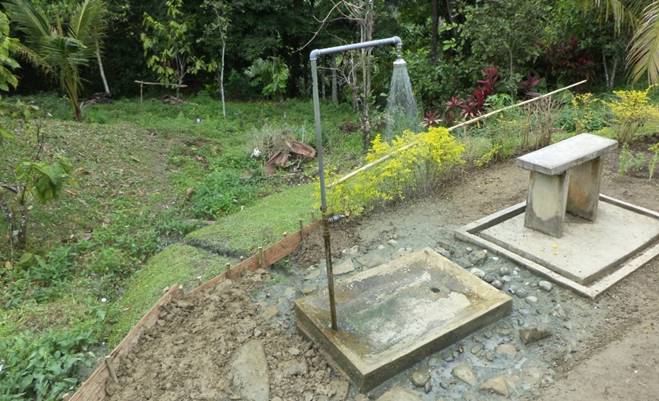 |
| Community Development Initiative, Water Supply and Sanitation funded by EU and WaterAid |


 |
| Community Projects funded by UNDP |
 |
| Disease pattern after the intervention |
Thursday, 10 March 2016
Real cost Health Care in rural PNG
The true cost of health service delivery in rural PNG does not necessarily measured in monetary terms along. Very detailed, comprehensive public expenditure framework policies have been passed, detailing very well the amount to be spent on health per capita but if they are not achievable than its a waste of resources pumped into developing such policies. If you talk to a rural villager but all these stuff he/she will never understand you well. All they want is the tangible result of the policies.
So what does it take to reach the marginalised, rural population of PNG? It costs the hard working health personnel at the forefront of health service delivery the commitment, the passion, the determination and the conviction to travel beyond their comfort zones, to struggle through rugged, harsh, unwelcoming terrain of PNG to reach these people and administer the basic yet vital health care services. Often all of their struggles and hard work go unnoticed and unrecorded.
Currently on the ground, the surviving health facilities and staff reaching and serving the peripherals of PNG are the health services operated by Christian Health Services, PNG, an overarching governing body of all Church Health Agencies in PNG but reports to National Department of Health. Most of these health facilities are dated back before the Second World War and they were built by early missionaries. They have contributed a lot to the history and development of modern Papua New Guinea.
Health service delivery in PNG after Independence was in a total state of chaos leading to poor health indicators. This trend follows the introduction of Organic Law on Provincial and Local Level Government as the government's attempt to introduce the concept of Decentralisation. The health service then after independence is a complicated, mixture of delegated and transferred roles and responsibilities between the three levels of government. As a desperate attempt to rectify this situation, the government introduces National Health Administration Act, then Public Hospital Act and the recent one which is National Health Administration Act to unify health service delivery as One System.
Though it affects everyone providing health services, the most affected ones are the government health services. Most of their health facilities have closed, workers roaming around being paid for doing nothing and the list goes on.
So what would be the best, effective and innovative way of doing business in health this 21st century? We are and will always be accountable for not providing the necessary but vital health services to the people placed under our care.
So what does it take to reach the marginalised, rural population of PNG? It costs the hard working health personnel at the forefront of health service delivery the commitment, the passion, the determination and the conviction to travel beyond their comfort zones, to struggle through rugged, harsh, unwelcoming terrain of PNG to reach these people and administer the basic yet vital health care services. Often all of their struggles and hard work go unnoticed and unrecorded.
Currently on the ground, the surviving health facilities and staff reaching and serving the peripherals of PNG are the health services operated by Christian Health Services, PNG, an overarching governing body of all Church Health Agencies in PNG but reports to National Department of Health. Most of these health facilities are dated back before the Second World War and they were built by early missionaries. They have contributed a lot to the history and development of modern Papua New Guinea.
Health service delivery in PNG after Independence was in a total state of chaos leading to poor health indicators. This trend follows the introduction of Organic Law on Provincial and Local Level Government as the government's attempt to introduce the concept of Decentralisation. The health service then after independence is a complicated, mixture of delegated and transferred roles and responsibilities between the three levels of government. As a desperate attempt to rectify this situation, the government introduces National Health Administration Act, then Public Hospital Act and the recent one which is National Health Administration Act to unify health service delivery as One System.
Though it affects everyone providing health services, the most affected ones are the government health services. Most of their health facilities have closed, workers roaming around being paid for doing nothing and the list goes on.
So what would be the best, effective and innovative way of doing business in health this 21st century? We are and will always be accountable for not providing the necessary but vital health services to the people placed under our care.
 |
| MCH Patrols, May River, Ambunti, SDA Health Services |
 |
| Young Nursing Officer with escort, MCH. May River, Ambunti, SDA Health Services |
 |
| Ambulance manoeuvring through wetlands during MCH, Kunjingini, Wosera/Gawi, CCHS |
 |
| Manoeuvring through bogged waterways, Nursing Officer on MCH Patrols, Ambunti, CCHS, Wewak |
 |
| Referring an Antenatal mother from Kambot, Angoram District to Wewak. Catholic Church Health Services (CCHS), Wewak |
Thursday, 4 June 2015
A call within a call
Coming from a humble origin in Biwat, East Sepik Province, Andrew Masi, answered Lord’s calling which would change his life forever.
Andrew Masi made his final vows on Sunday, the 31st May 2015 to be a full member of Divine Word Missionaries (SVD) after almost 12 years of Theological Studies. He is now awaiting his Deaconship and his Ordination before becoming a qualified SVD Father.
Prior to that he was working as a Male Nurse with Catholic Church Health Services, Wewak Diocese and served mostly in Kaugia Sub Health Centre, Wosera Gawi District.
One day when he was attending to a patient, the patient requested for a priest to come and give him the Holy Communion. Unfortunately there was no priest around. The dying patient then asked Andrew to be a priest so he can help the dying patients like him in the future.
Andrew regards this final conversation with the dying patient as a calling from God and left his career as a Male Nurse and joined the Seminary. He held onto his promise to the patient and remains steadfast to God’s calling. It is only a matter of time before his quest of becoming a priest comes to reality.
His dad wept and said, “my role has an earthly father to Andrew ends here and now it is the responsibility of the good Lord to guide and protect him, I have given him up to do Lord’s services”
Monday, 4 May 2015
SASSOYA RECEIVES NEW AMBULANCE, STAFF HOUSE
The long neglected Yangoru Saussia electorate in East Sepik continues to receive needed services in this term of Parliament.
Thanks to its “action” Member of Parliament and Minister for Trade, Commerce and Industry, Richard Maru.
This week a brand new 10 seater Toyota Land Cruiser was presented to the Catholic Church run Sassoya sub health center while Numbo LLG President, Michael Kombo officiated at the commissioning of a new staff house.
A thankful head of Catholic health services in East Sepik, Sr. Celine Yakasere received the ambulance on behalf of the health center.
The presentation of the ambulance was timely as it would contribute a lot in terms of meeting the demand for quality health services and MCH activities expected by the catchment population. Sassoya HSC has prospered over the years and has attracted patients from beyond its catchment population as well.
Thanks to its “action” Member of Parliament and Minister for Trade, Commerce and Industry, Richard Maru.
This week a brand new 10 seater Toyota Land Cruiser was presented to the Catholic Church run Sassoya sub health center while Numbo LLG President, Michael Kombo officiated at the commissioning of a new staff house.
A thankful head of Catholic health services in East Sepik, Sr. Celine Yakasere received the ambulance on behalf of the health center.
The presentation of the ambulance was timely as it would contribute a lot in terms of meeting the demand for quality health services and MCH activities expected by the catchment population. Sassoya HSC has prospered over the years and has attracted patients from beyond its catchment population as well.
DIGICEL GIVES K270,000 IN SERVICES TO EAST SEPIK
Telecommunication giant, Digicel PNG, continues with its benevolent mission in the country and this week pumped over K270,000 worth of assistance into East Sepik province.
This saw the delivery of a K180,000 brand new Toyota Land Cruiser 10 seater ambulance to the remote Ulupu sub health centre (SHC) in the Yamil Tamawi LLG of Maprik district and K92,970 to Callan Services in Wewak respectively, both Catholic church run organisations.
Callan Services through its Special Education Resource Center will roll out a year-long program dealing with People Living With Disabilities (PLWD) in partnership with Digicel’s Community Based Rehabilitation program (CBR) between May, 2015 and May, 2016.
The Ulupu ambulance was presented on Monday (Apr 20) to Wewak Diocese Catholic Health Services Secretary, Sr. Celine Yakasere, an occasion witnessed by Maprik Town Mayor, Paul Dingu, Yamil Tamawi LLG President, Carl Sangi with more than a thousand people who turned up to witness the event.
The investment prompted the Maprik town Mayor, Paul Dingu to make a commitment of K200,000 towards the further development of the health center while the Yamil Tamawi LLG president, Carl Sangi committed a further K20,000 to the health center.
The ambulance will do Mobile Health Clinic (MHC) runs in the Yamil Tamawi area which has a population of more than 20,000 people.
Maprik MP, John Simon was unable to attend the Ulupu ambulance presentation however, expressed gratitude to Digicel Foundation describing it as “continuous good work of private companies partnering Government in service delivery”.
Ulupu SHC Officer In Charge (OIC), Mr. Eddie Yehrewanie thanked Digicel PNG Foundation for responding to their need and assured them that the ambulance will be used to full fill its purpose of doing routine Outreach Clinics and attend to vulnerable population of pregnant mothers and children.
“The delivery of the ambulance is timely and will greatly help us in reaching out to the 20, 000 plus population of Ulupu SHC catchment,” he added.
The ambulance itself is fully equipped with all the necessary medical equipment capable of performing its duty to full potential.
Digicel Senior Program Manager who officiated at the ceremony, Ms. Ruth Javin said “Digicel PNG Foundation strives to ensure communities are healthy, primarily through the support of community oriented activities. It is the vision of Digicel Company Founder that wherever Digicel Company grows, the community in which the company is doing business grows with it”.
This saw the delivery of a K180,000 brand new Toyota Land Cruiser 10 seater ambulance to the remote Ulupu sub health centre (SHC) in the Yamil Tamawi LLG of Maprik district and K92,970 to Callan Services in Wewak respectively, both Catholic church run organisations.
Callan Services through its Special Education Resource Center will roll out a year-long program dealing with People Living With Disabilities (PLWD) in partnership with Digicel’s Community Based Rehabilitation program (CBR) between May, 2015 and May, 2016.
The Ulupu ambulance was presented on Monday (Apr 20) to Wewak Diocese Catholic Health Services Secretary, Sr. Celine Yakasere, an occasion witnessed by Maprik Town Mayor, Paul Dingu, Yamil Tamawi LLG President, Carl Sangi with more than a thousand people who turned up to witness the event.
The investment prompted the Maprik town Mayor, Paul Dingu to make a commitment of K200,000 towards the further development of the health center while the Yamil Tamawi LLG president, Carl Sangi committed a further K20,000 to the health center.
The ambulance will do Mobile Health Clinic (MHC) runs in the Yamil Tamawi area which has a population of more than 20,000 people.
Maprik MP, John Simon was unable to attend the Ulupu ambulance presentation however, expressed gratitude to Digicel Foundation describing it as “continuous good work of private companies partnering Government in service delivery”.
Ulupu SHC Officer In Charge (OIC), Mr. Eddie Yehrewanie thanked Digicel PNG Foundation for responding to their need and assured them that the ambulance will be used to full fill its purpose of doing routine Outreach Clinics and attend to vulnerable population of pregnant mothers and children.
“The delivery of the ambulance is timely and will greatly help us in reaching out to the 20, 000 plus population of Ulupu SHC catchment,” he added.
The ambulance itself is fully equipped with all the necessary medical equipment capable of performing its duty to full potential.
Digicel Senior Program Manager who officiated at the ceremony, Ms. Ruth Javin said “Digicel PNG Foundation strives to ensure communities are healthy, primarily through the support of community oriented activities. It is the vision of Digicel Company Founder that wherever Digicel Company grows, the community in which the company is doing business grows with it”.
Wednesday, 11 March 2015
A glimpse of Wewak Town
Attached here is a short video showing another typical day of living in the tropical town of Wewak, Papua New Guinea.
Its not much but I hope you like it.
Subscribe to:
Posts (Atom)